There is a lot of information and conflicting information out there regarding the current exercise recommendations. Furthermore, these keep changing over the years, which makes it even harder to know. It also depends on many other factors, including medical conditions (such as Cardiovascular Disease, Diabetes, Osteoporosis, Endometriosis, Chronic Pain), age level, gender and even the intensity of exercises undertaken throughout the week. In saying that, we have tried our best to give you the latest information (Current to 2023) regarding the most common situations in the simplest digestible (get it…?) form.
Within the apparently healthy population (a state of complete physical, mental and social well-being and not merely the absence of disease and infirmity as stated by WHO), individuals are unsure if they’re hitting the recommended amount of weekly exercise minutes. Due to this, a greater case in the development of lifelong conditions such as diabetes and heart disease has occurred, leading to a rise in global levels of sickness and death.
Needless to say, exercise is an amazing way to help prevent, manage or delay the onset of these prevalent conditions, along with so many more benefits, but you may be thinking, what exactly should you be doing, and how many minutes you should be aiming for? Well, this blog will uncover all the information you need to know!
Physical inactivity is a term that is not uncommonly used, particularly among Australians. Due to the natural demands of life, such as work, children/family commitments and hobbies, along with other aspects such as injury, individuals may struggle to have the time, motivation or desire to partake in exercise, which is completely understandable! In saying this, it is thought that nearly 60% of Australian adults, and 70% of pregnant women, do not meet the recommended weekly exercise minutes, resulting in an increased likelihood of developing lifelong chronic conditions.
Enough about the negative side of things, though, as you may be thinking about what the benefits of being physically active are. Well, similarly to the negative impacts of physical inactivity, exercise has flow-like effects too! Being physically active has the overarching goal of reducing the likelihood of developing chronic conditions, as mentioned, but there is much more to delve into.
Exercise holds numerous benefits both physically, mentally and even socially! Starting with the mental benefits, exercise is a prime way to release our happy hormones called endorphins. The release of these happy chemicals helps reduce levels of stress and increase feelings of well-being, which in tandem helps reduce levels of depression and anxiety. Furthermore, the physical benefits of exercise come in abundance, primarily reducing the risk of obesity, which reduces or maintains blood pressure, total cholesterol and blood sugar levels. Further improvement in quality of life, sleep quality and energy levels also occurs. This then can be linked to the overarching stem of reducing the likelihood of developing chronic conditions!
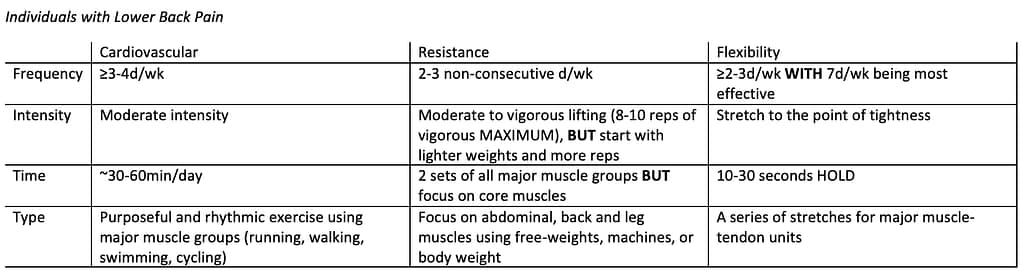
There are three (3) main modalities of exercise: cardiovascular, resistance, and flexibility. Each of these modalities holds various and numerous benefits, but they are a fantastic mixture when used in tandem with each other!
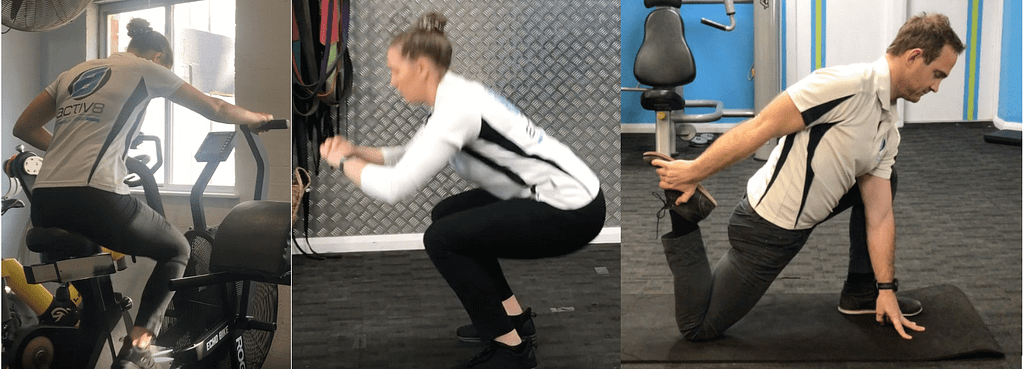
As mentioned, the ideal minutes are different between populations, so depicted in the table below are three subgroups associated with the apparently healthy population.
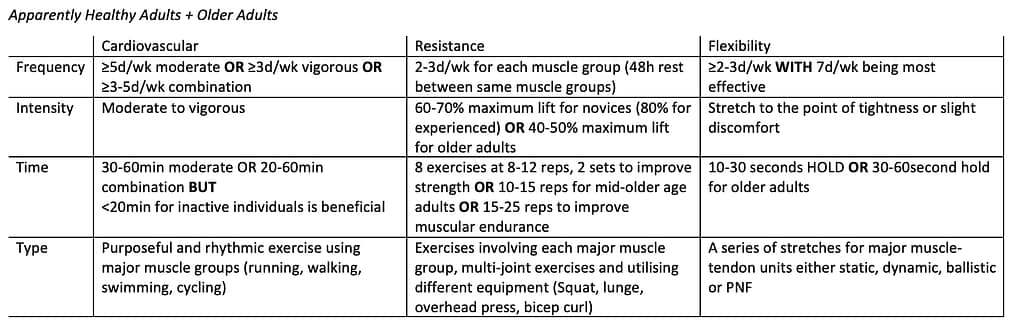
2. Pregnant Women
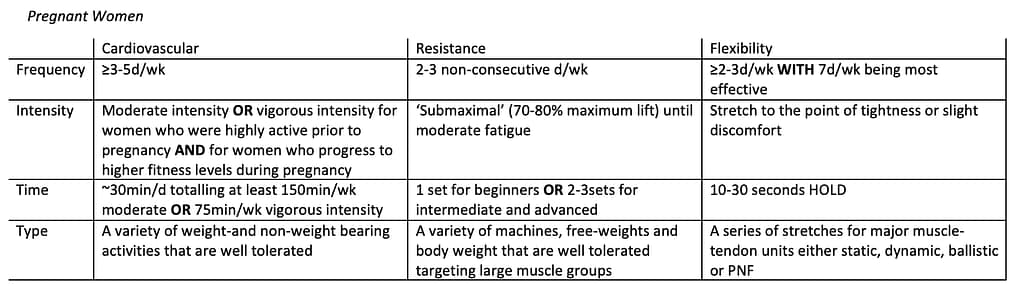
3. Individuals with Lower Back Pain
In summary, it’s important to acknowledge that any amount of exercise, no matter how brief, is a step in the right direction toward a healthier lifestyle. However, when we delve deeper into the realm of fitness and well-being, we find that the most significant rewards, both for our physical and mental health, emerge when we commit to a more structured exercise routine.
The magic number to aim for is approximately 150 minutes of weekly cardiovascular exercise, ideally supplemented with resistance and flexibility training. This balance strikes a harmonious chord in our pursuit of overall wellness. Why, you ask?
First and foremost, cardiovascular exercise elevates our heart rate, strengthens our lungs, and enhances circulation, effectively boosting our cardiovascular health. This form of exercise, which includes activities like brisk walking, running, cycling, and swimming, plays a pivotal role in reducing the risk of heart disease, stroke, and hypertension.
On the other hand, resistance training, such as weightlifting or bodyweight exercises, empowers our muscles and bones. This crucial component of the ideal workout routine not only helps sculpt a toned physique but also fortifies our skeletal system. By engaging in resistance training at least a couple of times a week, we can actively combat the decline in muscle mass associated with aging and promote better metabolic health.
Flexibility training, often encompassed by practices like yoga or stretching exercises, enhances our range of motion and helps prevent injuries. It keeps our joints supple and muscles pliable, reducing the risk of strains, sprains, and other physical mishaps.
But perhaps the most compelling reason to strive for this comprehensive exercise regimen is its role in disease, illness, and injury prevention, management, and delay. Regular exercise, when combined with a balanced diet and other healthy lifestyle choices, can be a formidable ally against chronic diseases like diabetes, obesity, and certain types of cancer. It helps manage conditions such as arthritis and osteoporosis, improving overall quality of life. Moreover, it aids in the prevention of injuries by enhancing our physical resilience and reducing the risk of accidents.
In essence, while any minute of exercise is undoubtedly better than none, it’s the dedication to a well-rounded exercise routine that truly unlocks the extensive benefits for our body and mind. It’s a commitment to your health, longevity, and vitality. So, as you embark on your fitness journey, remember that striving for approximately 150 minutes of weekly cardiovascular exercise, complemented by resistance and flexibility training, is a powerful formula that can lead to a healthier, happier you, while simultaneously delaying, managing, or preventing a host of diseases, illnesses, and injuries.
Written by Accredited Exercise Physiologist Paolo Mitry from Activ8 Health Club
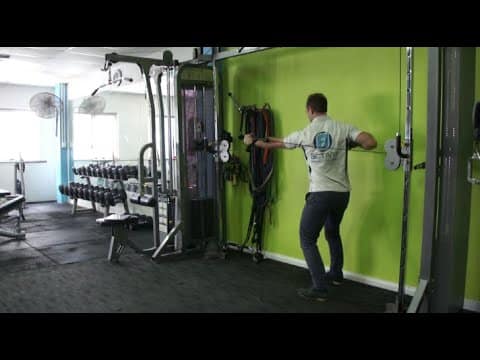
The Push-Pull exercise is a functional and fun upper-body movement that is a great way to incorporate push, pull and rotation into one movement.
Incorporating push-pull exercises in your workout regimen can be transformative for your overall fitness. For instance, consider a classic push-pull workout where you alternate between push-ups and bent-over rows. This combination not only targets various muscle groups but also promotes balance and coordination, ensuring that no particular area is overworked while others are neglected.
This can lead to enhanced muscular endurance and strength gains, especially when performed in a circuit format that maintains an elevated heart rate. Perform exercises in a sequence, such as push-ups followed immediately by rows, resting only after completing the round. This keeps your muscles engaged and challenges your cardiovascular system.
Depending on sets and repetitions performed for the exercise, this is great to increase muscular strength and endurance, along with some conditioning elements.
Moreover, utilising resistance bands during push-pull workouts can provide varying levels of difficulty, catering to beginners and advanced athletes alike. Bands can be adjusted for resistance, allowing a customised approach to strength training that matches the user’s fitness level. For example, performing resistance band push-ups can significantly increase the challenge compared to traditional forms.
Additionally, you can integrate functional movements that mimic real-life activities. For instance, adding a squat into your push-pull routine can enhance the workout’s effectiveness by engaging the lower body. This creates a total body experience that improves functional strength and prepares you for everyday tasks.
It’s also important to address the mental aspect of workouts. Engaging in push-pull routines can boost your motivation and enjoyment levels. The variety of movements keeps the workout fresh and exciting, which can be crucial for sustaining a long-term fitness journey. Each session can feel like a new challenge, encouraging you to push your limits and strive for continuous improvement.
Incorporating rest days is also vital to your progress. Adequate recovery allows your muscles to repair and grow stronger. Therefore, consider scheduling push-pull workouts three times a week, interspersed with rest or light activity days. This balanced approach ensures that you reap the full benefits of your efforts while minimising the risk of injury.
Furthermore, tracking your progress is essential in any fitness journey. Keep a workout journal to note down your sets, repetitions, and how you felt during each session. This practice not only holds you accountable but also allows you to see your improvements over time, which can be incredibly motivating.
Lastly, consider involving a workout partner. Engaging in push-pull exercises with a friend can add an element of fun and competition. You can challenge each other to achieve better results and keep each other accountable, enhancing your overall workout experience.
Also, try different cable heights and stances (squat, lunge, kneeling, ½ kneeling) to engage slightly different biomechanics and outcomes.
As with all exercises, it is critical that you gradually build up to these more challenging exercises to ensure safety is maintained. Before trying this exercise, a foundation of pushing, pulling and rotational movement patterns must be developed.

The Push-Pull Exercise is a compound movement that involves both pushing and pulling motions, engaging multiple muscle groups and offering a range of benefits.
By combining pushing exercises like push-ups or bench presses with pulling exercises such as rows or pull-ups, this exercise promotes balanced muscle development and functional strength.
It targets the chest, shoulders, triceps, back, and biceps, promoting upper body strength and muscular symmetry.
The push-pull exercise also improves posture, enhances stability, and increases overall muscle coordination. It can be tailored to different fitness levels and is an efficient way to save time while maximising the effectiveness of your workout.
The Push-Pull Exercise is a compound movement that engages several key muscle groups in the upper body. During the pushing phase, muscles such as the chest (pectoralis major), shoulders (deltoids), and triceps are primarily activated.
These muscles work together to generate force and push objects away from the body. Conversely, during the pulling phase, muscles such as the back (latissimus dorsi, rhomboids), biceps, and forearms come into play.
These muscles work in harmony to pull objects towards the body. By incorporating both pushing and pulling movements, the Push-Pull Exercise provides a comprehensive upper-body workout, promoting balanced muscle development, strength, and stability.
In conclusion, the Push-Pull Exercise is a highly effective and versatile compound movement that engages multiple muscle groups in the upper body. By combining pushing and pulling exercises, such as push-ups and rows, this exercise promotes balanced muscle development, strength, and stability.
The pushing phase activates muscles like the chest, shoulders, and triceps, while the pulling phase targets the back, biceps, and forearms.
By incorporating both pushing and pulling movements into your workout routine, you can achieve a well-rounded upper-body workout, improve muscle coordination, enhance posture, and boost overall upper-body strength. So, whether you’re a beginner or an advanced fitness enthusiast, the Push-Pull Exercise is an excellent addition to your exercise regimen.
If you need further guidance or personalised advice on integrating push-pull exercises into your routine effectively, please get in touch with us. Take advantage of a free 15-minute telehealth consultation with our exercise physiologist, who can help tailor a plan that suits your individual needs.
Written by Trent Carruthers, an Exercise Physiologist at Activ8 Health Club. The Push-Pull exercise is an essential component of a comprehensive fitness regimen, offering a plethora of benefits for both strength and coordination. By incorporating these movements thoughtfully, individuals can significantly enhance their training outcomes.

The plank exercise is a fundamental core-strengthening movement that has gained popularity in recent years due to its simplicity and effectiveness. It targets multiple muscle groups in conjunction, including the abs, back, shoulders, and glutes, making it a versatile exercise suitable for individuals of all fitness levels.
Whether you’re a beginner looking to build core strength or an advanced athlete aiming to challenge yourself, incorporating regressions and progressions into your plank routine can help you maximise your results. In this blog post, we will explore various regressions and progressions of the plank exercise to help you tailor your workout to your current fitness level.
As with all exercises, it is critical that you gradually build up to these more challenging exercises to ensure safety is maintained. We have included some exercise progressions to master before moving on to this one. In addition, this exercise can be further progressed, which we will discuss in future blogs.

The plank exercise may seem deceptively simple, but its impact on your fitness journey is profound. By incorporating planks into your workout routine, you can strengthen your core, engage multiple muscle groups, improve posture, prevent injuries, and enhance overall stability. The beauty of planks lies in their versatility and time efficiency, making them an ideal addition to any fitness program. So, if you’re looking for a powerful exercise that delivers remarkable results, start planking and unlock the incredible benefits it offers for your body and well-being.

The Side Plank: Another very important and highly beneficial plank worth mentioning is the side plank. Adding variety to your plank routine, the side plank targets the obliques and improves stability. Start by lying on your side, legs extended, and one forearm on the ground, elbow beneath your shoulder. Lift your hips off the ground, creating a straight line from your head to your feet. Keep your core engaged and hold the position for an equal amount of time on both sides.

As with all exercises, it is critical that you gradually build up to these more challenging exercises to ensure safety is maintained. A safe exercise progression may include the following;
Supine pelvic floor activation
Low plank on knees
Low Plank on toes
High Plank on toes
High Plank on TRX/Suspension Trainer
TRX/Suspension Trainer Pike
Note: This exercise can be further progressed for added benefits!
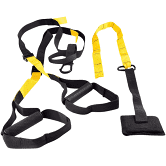
One of these great progressive exercises for the plank is the TRX/Suspension Trainer Pike. This exercise trains and strengthens your upper body, whilst incorporating the majority of your core muscles through dynamic yet controlled movements. It’s an excellent exercise for those who want to progress the high plank, looking for variety or additional functional full-body strength. Interesting, this exercise may look simple; however, it is very challenging, and you will even be training your cardiovascular system!
To perform this exercise, follow these simple steps;
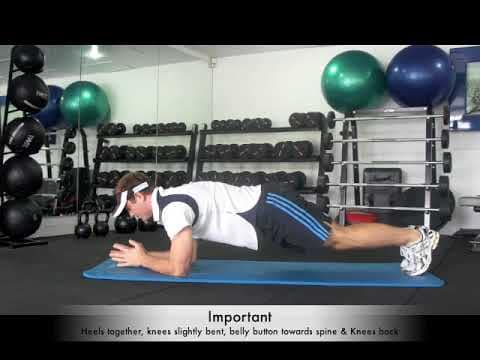
As with all exercises, it is critical that you gradually build up to these more challenging exercises to ensure safety is maintained. We have provided a safe exercise progression below with video demonstrations of each exercise variation to help you.

NOTE: Another very important and highly beneficial plank worth mentioning is the side plank. Adding variety to your plank routine, the side plank targets the obliques and improves stability. Start by lying on your side, legs extended, and one forearm on the ground, elbow beneath your shoulder. Lift your hips off the ground, creating a straight line from your head to your feet. Keep your core engaged and hold the position for an equal amount of time on both sides.
If you have any further questions, please contact us anytime.
NOTE: This exercise can be further progressed, which we will review in further blogs so stay tuned!
The Supine Pelvic Floor Activation exercise is a gentle yet essential movement for activating and strengthening the pelvic floor muscles. Begin by lying on your back with your knees bent and feet flat on the floor. Relax your body and take a deep breath. As you exhale, gently engage your pelvic floor muscles by imagining pulling them upwards and inwards. Focus on isolating these muscles without tensing your glutes or abdominals. Hold the contraction for a few seconds and then release. This exercise helps improve pelvic floor function, supports bladder and bowel control, and can be beneficial for women during pregnancy or postpartum, as well as individuals with pelvic floor dysfunction.

The Low Plank on Knees exercise is a modified variation of the traditional plank, suitable for beginners or individuals with limited upper body strength. Start by positioning yourself on all fours, with your knees directly below your hips and your hands beneath your shoulders. Extend your legs backward and lower yourself onto your forearms, with your elbows directly beneath your shoulders. Engage your core and maintain a straight line from your head to your knees. This exercise targets the core muscles, including the abdominals and lower back, while reducing the load on the upper body. It helps build core strength and stability and prepares individuals for more advanced plank variations.

The Forearm Plank on Toes exercise is a powerful variation of the plank that targets the core muscles, including the abdominals and lower back. Start by kneeling on the ground and placing your forearms on the floor, elbows directly beneath your shoulders. Extend your legs back, balancing on your toes, and engage your core as you maintain a straight line from your head to your heels. This exercise activates and strengthens the deep stabilising muscles of the core, improving core stability and spinal alignment. It also engages the shoulders, arms, and legs, making it an effective full-body exercise for building strength and endurance.

The High Plank on Toes exercise is a challenging and effective way to strengthen the core, shoulders, and arms. Start by assuming a push-up position with your arms fully extended, palms flat on the ground, and hands shoulder-width apart. Keep your body straight and engage your core, glutes, and legs. Balancing on your toes, maintain a straight line from your head to your heels. This exercise builds core strength, stability, and endurance while also engaging the muscles of the upper body and lower body. It is a versatile exercise that can be incorporated into various workout routines to enhance overall strength and body composition.

The TRX/Suspension Trainer High Plank exercise is a challenging and effective way to strengthen the core, shoulders, and arms. Start by adjusting the straps to an appropriate length and place your feet in the foot cradles. Assume a high plank position with your hands directly beneath your shoulders, engaging your core and keeping your body in a straight line. The suspension trainer adds an element of instability, intensifying the activation of your muscles. This exercise improves overall core stability, enhances shoulder strength and endurance, and engages the muscles of the chest, back, and legs. It can be modified by adjusting the height of the straps to suit different fitness levels.

The TRX/Suspension Trainer Pike exercise is a core-strengthening movement that targets the abdominals, hip flexors, and shoulders. Using adjustable straps, place your feet in the foot cradles and assume a push-up position. Engage your core and lift your hips towards the ceiling while bringing your feet towards your hands, creating a V shape with your body. This exercise builds core stability, strengthens the abdominal muscles, and improves shoulder stability. It also engages the glutes, hamstrings, and quadriceps for a full-body workout. Modify the exercise by bending the knees for beginners and progress to a full pike with straight legs for added challenge.
The plank exercise is an essential addition to any fitness routine, offering a wide range of benefits and adaptability to suit all fitness levels. By incorporating regressions and progressions into your plank workout, you can gradually increase your strength, endurance, and stability while avoiding plateaus. Remember to focus on proper form and technique to maximize the effectiveness of each variation. Whether you are a beginner or an advanced fitness enthusiast, these regressions and progressions will help you take your plank exercise to the next level, allowing you to build a stronger, more resilient core. So, get down on the floor and start planking your way to a fitter, healthier you!
If you need further guidance, please contact us and take advantage of a free 15-minute telehealth consultation with our exercise physiologist.
Written by Kaitlyn Eisenhuth, an Exercise Physiologist at Activ8 Health Club
Doing regular back extensions can bring numerous benefits to your health. Not only can it help improve your posture, but it can also reduce the risk of suffering from back pain and other spine-related problems. Additionally, doing regular spine exercises can help you become more flexible and strengthen the muscles in your back, leading to improved overall physical performance.
Furthermore, doing regular back extensions has long-term effects that will benefit you for years to come. Regularly doing these exercises will help keep your spine healthy, which is essential for maintaining a healthy lifestyle, improving balance and coordination, as well as reducing fatigue and stress levels.

Depending on the back extension variation you are performing, the muscles involved will vary slightly; however, these exercises are primarily used to strengthen the muscles of the lower back and posterior (back) chain. It targets the Erector Spinae, Glutes, Hamstrings, and other core muscles that are important for maintaining a healthy posture. By performing this exercise regularly, you can increase the strength and flexibility in your lower back as well as improve your overall body composition. Additionally, it can help reduce back pain caused by weak or tight muscles in the lower back region.

Doing regular back extensions can bring numerous benefits to your health. Not only can it help improve your posture, but it can also reduce the risk of suffering from back pain and other spine-related problems. Additionally, doing regular spine exercises can help you become more flexible and strengthen the muscles in your back, leading to improved overall physical performance.
Furthermore, doing regular back extensions has long-term effects that will benefit you for years to come. Regularly doing these exercises will help keep your spine healthy, which is essential for maintaining a healthy lifestyle, improving balance and coordination as well as reducing fatigue and stress levels.

As with all exercises, it is critical that you gradually build up to these more challenging exercises to ensure safety is maintained. A safe exercise progression may include the following;
Prone (facing down) Floor – Supported Back Extension
Swissball-Supported Back Extension
Isometric Back Extension
Back Extension (Dynamic)
Back Extension with Rotation
Note: This exercise and back extension alternatives can be further regressed and progressed for added benefits!
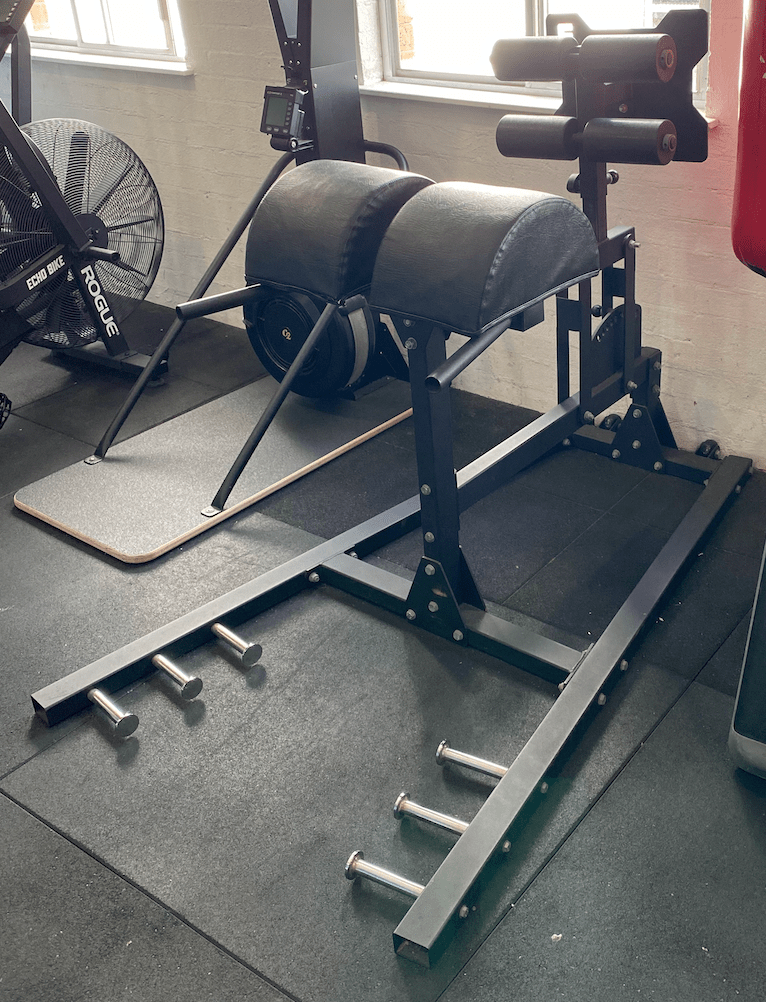
The back extension exercise primarily targets the muscles of the lower back, including the Erector Spinae muscles, whilst also engaging the Glutes, Hamstrings, and core muscles. The exercise is typically performed using a back extension bench, but variations can be done using a stability ball or even on the floor, which we will explore throughout this blog.
To perform the back extension exercise:
It’s important to note that proper form and control are crucial in this exercise to prevent strain or injury. As always, consult with a qualified fitness professional before attempting new exercises, especially if you have any pre-existing conditions or concerns.
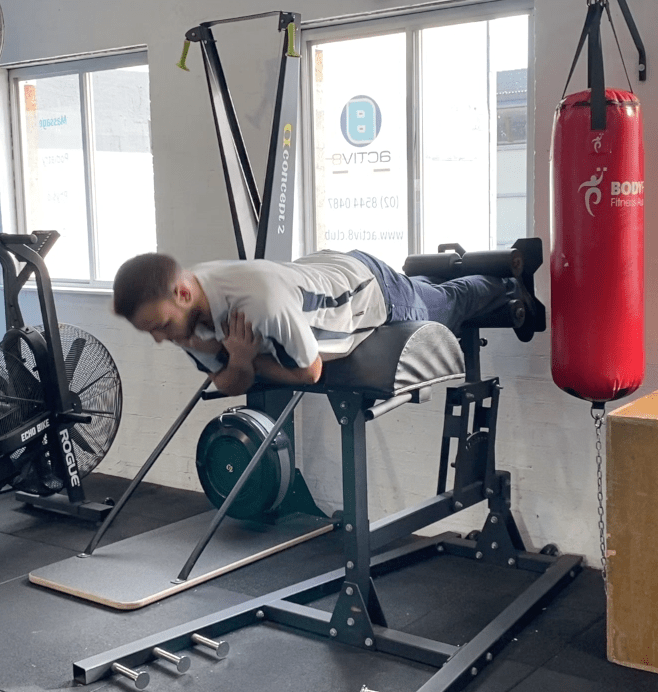
Incorporating back extensions into your exercise routine holds multiple benefits in many different elements. Back extensions help in strengthening the lower back, increasing surrounding muscular strength, endurance and ability to support your spine to promote healthy posture and reduce the risk of lower back pain. Furthermore, this exercise helps enhance core stability, which is essential for maintaining proper posture, balance, and overall functional strength. Moreover, while primarily targeting the lower back, back extensions also engage the gluteal muscles (Glutes) and Hamstrings to a lesser extent. Strengthening these muscles can improve hip stability and overall lower-body strength.
It’s worth noting that, as with any exercise, it’s important to use proper form and technique when performing back extensions to maximise their benefits and minimise the risk of injury. If you have any underlying health conditions or concerns, it’s advisable to consult with a qualified professional before incorporating back extensions into your routine.
As with all exercises, it is critical that you gradually build up to these more challenging exercises to ensure safety is maintained.
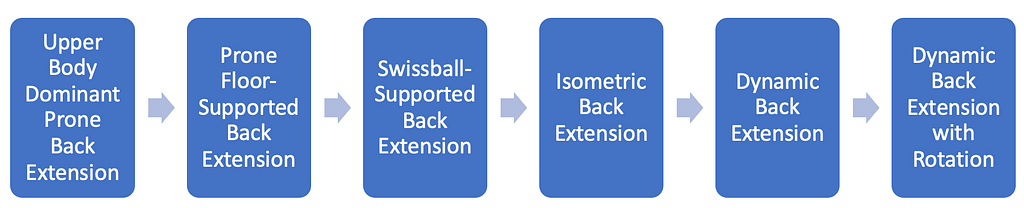
We have provided a safe exercise progression below with video demonstrations of each to help you.
If you have any further questions, please contact us anytime.
NOTE: This exercise can be further regressed and progressed, which we will review in further blogs, so stay tuned!


The Back Extension exercise is critical to a well-balanced training routine, providing essential strengthening demands to your posterior muscles, in particular the Erector Spinae, Glutes and Hamstrings.
Improvements from these exercises will result in improved posture and reduced risk of suffering back pain and other spine-related problems. Additionally, doing regular spine exercises can help you become more flexible and strengthen the muscles in your back, leading to improved overall physical performance.
It is important to start adding these exercises to your routine with a variation you can handle, before gradually increasing the complexity and demand with more challenging variations.
If you need further guidance, please reach out to us and take advantage of a free 15-minute telehealth consultation with our exercise physiologist.
Written by Kaitlyn Eisenhuth, an Exercise Physiologist at Activ8 Health Club

The Horizontal Cable Woodchop exercise is one of the best rotational exercises that can easily be modified and applied to your training regimen today. This is primarily due to the strengthening nature of the large number of muscles acting around your trunk, whilst increasing your mobility along your spine and hips, which will significantly reduce the risk of lower back pain. Furthermore, it’s a fantastic way to train and strengthen your “core muscles” in an alternate manner when compared to your general core workouts due to the dynamic movements involved. In saying this, it is an exercise that’ll surely raise a sweat and get your heart pumping, too!
The Woodchop is an exercise that is diverse in how it can be performed, by making it easier or harder, depending on the level you may be at. Although it is critical, as with every exercise, that you build up to the more challenging variations to ensure safety is maintained. Throughout this blog, some exercise progressions and regressions are included, in which further progressions can be implemented, which will be discussed in future blogs.

The Horizontal Cable Woodchop is a fantastic functional exercise that targets numerous muscles in one movement. It can be utilised as a strengthening, flexibility, and/or cardiovascular exercise, with all involving aspects of balance, depending on the weight and intensity with which you perform the movement.
It is also a very relevant movement required in everyday life that will help improve your ability to enjoy life and complete your ADLs.
Noting the benefits of flexibility, the wood chop is a great exercise to further help open up your back and hip muscles to aid with any potential stiffness, which is extremely common in these areas among all adults.

During the wood chop, multiple muscles are engaged, making it a compound exercise. Two major muscles of your core are heavily targeted: your transverse abdominals, as well as your obliques. Further engagement of many muscles located in your back, arms (biceps, triceps), shoulders (pecs, rotator cuff, deltoid), and legs (quadriceps, glutes, calves) is activated.

As with all exercises, it is critical that you gradually build up to these more challenging exercises to ensure safety is maintained. Additional considerations must be taken regarding what you are trying to achieve with the exercise and any other medical concerns, so it is recommended to seek professional advice and guidance where required. A safe exercise progression may include the following:
– Pallof Press
– Seated Horizontal Cable Woodchop
– Standing Horizontal Cable Woodchop
– High to Low / Low to High Cable Woodchop
– ½ Kneeling Horizontal Cable Woodchop
– Kneeling Horizontal Cable Woodchop
Note: These exercises can be further progressed for added benefits; however, start with these and get rotating more…..!
The Horizontal Cable Woodchop is a fantastic functional exercise that targets multiple muscles in one movement. Not only can the wood chop be utilised as a strengthening exercise, but it also holds benefits in increasing movement and flexibility in your hips and spine, as well as training your cardiovascular system, depending on the weight and intensity with which you perform the movement. Furthermore, it is a good exercise to test your balance during a movement.
The wood chop is also a very common movement that all individuals perform in everyday life without even realising. The simple motion of fastening your seatbelt, moving a box from the floor to the shelf, or swinging a golf club is the perfect replication of this. Mastering the wood chop will be very beneficial when having to complete tasks of this movement in your everyday life.
To perform the Standing Woodchop, follow these simple steps;
Note: You should only pull across to where you are comfortable and pain-free.
As previously mentioned, the woodchop exercise can easily be modified to meet everyone’s current fitness levels, medical condition and training goals. As with all exercises, it is critical that you gradually build up to these more challenging exercises to ensure safety is maintained and seek professional advice and guidance where required.
We have provided a safe exercise progression below with video demonstrations of each to help you.

If you have any further questions, please contact us anytime.
Note: These exercises can be further progressed for added benefits; however, start with these and get rotating more…..!


In conclusion, the Horizontal Cable Woodchop exercises are an extremely relevant exercise that holds many benefits comprises but not limited to increasing neuromuscular strength, cardiovascular and overall mobility of your spine and hips. The benefits of the exercise, however, depend upon its application, and these must be considered when introducing it into your training routine.
Another benefit of the Woodchop is that it can be easily progressed or regressed depending on your fitness level, health circumstances and goals. In addition, these movements are an excellent way to reduce the risk and treat many musculoskeletal injuries, such as those in the lower back.
Like all exercises, it is critical that you gradually introduce these exercises that you can safely and correctly perform, before working towards the more challenging and progressive variations as shown within this blog. If you are unsure about any of these, you must seek professional advice.
If you need further guidance, please reach out to us and take advantage of a free 15-minute telehealth consultation with our exercise physiologist.
Written by Paolo Mitry, an Exercise Physiologist at Activ8 Health Club
The Supine leg lifts are great exercises that target your “core muscles“, and can be progressed (harder) or regressed (easier) depending on what level you may be at! In addition, the beauty of this exercise is its simplicity and effectiveness, whether you situate yourself on a gym mat, park grass, or on a sandy beach!
Irrespective of the exercise being completed, it is vital to remember the importance of effectively building up how challenging the exercise is safely. Included throughout this blog are fantastic exercise progressions and regressions for you that you can utilise immediately!

Supine (meaning lying on your back) Leg Lift is a fantastic exercise that engages the many muscles within your core region. Don’t be fooled, it is not just your abdominals activating throughout this exercise, but many more acting on your Lumbar-pelvic when performed correctly….!

There are many associated benefits of the Supine Leg Lift exercise. Due to their nature in activating your “core muscles” (abdominals, back, pelvis and hip muscles), these exercises promote healthy hip, lower back health and stability, just to mention a few.
It has been proven that these exercises are critical to delaying or reducing the onset, management and even treatment of lower back pain.
Finally, the overall simplicity of this exercise is second to none, allowing you to complete it anywhere, anytime!

As with all exercises, it is critical that you gradually build up to these more challenging exercises to ensure safety is maintained. A safe exercise progression may include the following;
Supine Pelvic Floor Activation / Unilateral Table Top
Short Lever Supine Leg Lift
Bilateral Table Top
Long Lever Supine Leg Lift
V-Sit
Hanging Leg Lift
Note: This exercise can be further progressed for added benefits!
The Supine Leg Lift is a fantastic exercise that engages the muscles within your core. The beauty of the Supine Leg Lift is the fact that it is so simple to set up, requiring minimal to no equipment. It is a great alternative exercise to train your core when you have no equipment or want to spice up your usual routine! Although it may seem easy due to its simplicity, it is deceivingly challenging with many benefits that this blog will explore!
To perform this exercise, follow these simple steps;
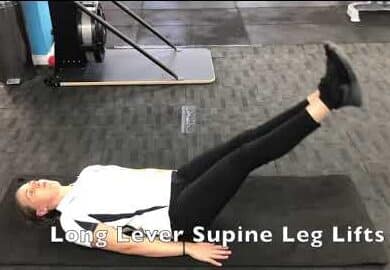
As mentioned in this blog, the Supine Leg Lift is a great exercise to target your core muscles, but let us get specific!
Many people are under the assumption that our core muscles are our stomach muscles or “abdominals”, which is partially correct. In fact, our core muscles are comprised of the many muscles in our abdominals, lower back, pelvis and hip region. Exercising these areas to increase muscular strength and endurance is vital to promote healthy hip and back health and stability.
So with that cleared, you may be thinking about the specific benefits of the Supine Leg Lift! Well, through the activation of your muscles within the core region, strengthening in this area will coincide. Specifically, strengthening this area will, in tandem, hold many benefits to greater support and stabilisation within your hips and lower back, which can therefore help reduce or delay the onset of pain. In saying this, the lower back is one of the most prevalent areas subject to pain in adults.
Furthermore, strengthening your core helps increase your ability to complete activities of daily living, such as walking, more efficiently and safely with less effort. In saying all this, the overall simplicity of being able to complete it, requiring minimal to no equipment to set up, is a massive benefit!
As with all exercises, it is critical that you gradually build up to these more challenging exercises to ensure safety is maintained.
We have provided a safe exercise progression below with video demonstrations of each to help you work towards and beyond the Long Lever Supine Leg Lift.

If you have any further questions, please contact us anytime.
NOTE: This exercise can be further progressed, which we will review in other blogs so stay tuned!


The Supine Leg Lift is a simplistic yet effective exercise that can be implemented into your training regime despite where you may be. Using your own body weight against (and with) gravity, resistance will be given, holding many benefits targeting your core region!
The given exercise progressions and regressions should slowly be worked through and further implemented once your body has become accustomed to whatever level you may be at!
If you need further guidance, please reach out to us and take advantage of a free 15min telehealth consultation with our exercise physiologist.
Written by Paolo Mitry, an Exercise Physiologist at Activ8 Health Club
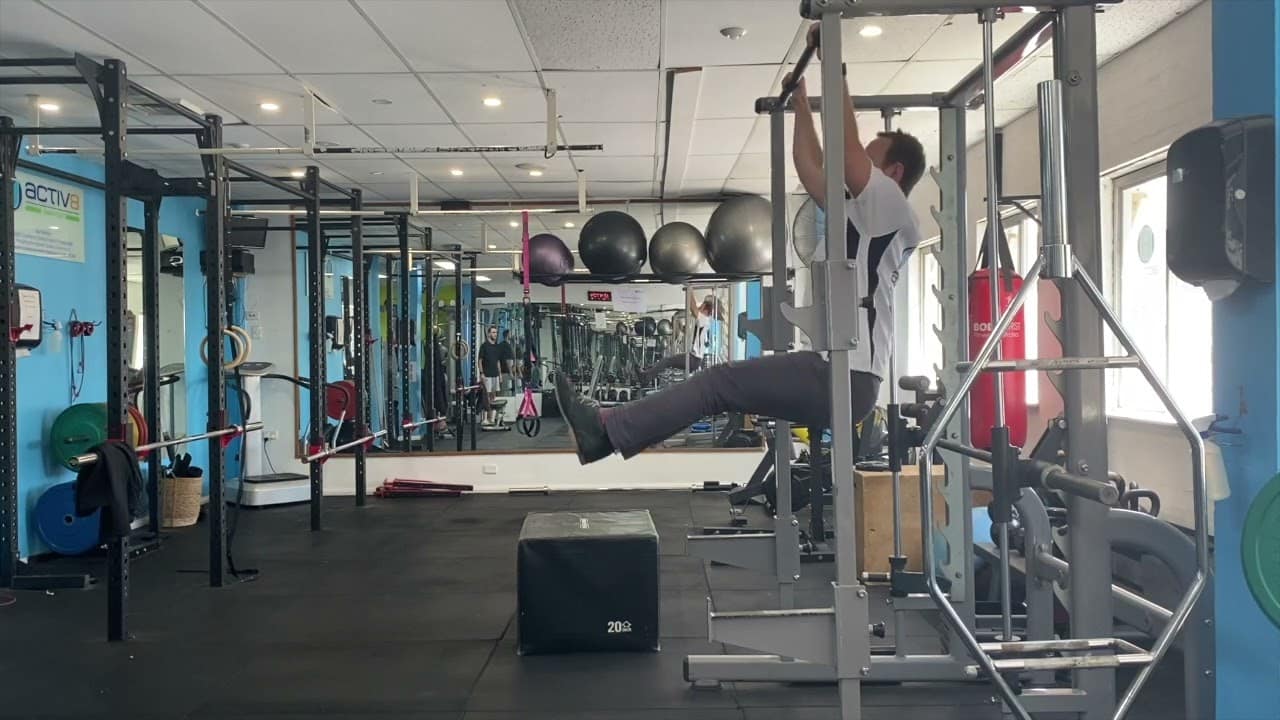
The Chin Ups, also known as pull-ups, are extremely challenging yet beneficial exercises that will push your upper body to its limits. Chin-ups are a closed-chain exercise, meaning your hands are fixed and don’t move during the entire exercise. These forms of exercise result in greater muscle fibre recruitment. Additionally, chin-ups are a compound exercise that uses multiple muscles and joints during the movement, making them extremely functional whilst mimicking many movements you complete in daily life.
The chin-up exercise can be used for many elements of health, which are noted below:
Another great thing about this exercise is that it can be modified in various ways to suit every fitness and training level you may be at, and with it being a compound exercise, time efficiency makes this exercise extremely valuable.
Changes in grip and hand positioning will alter the mechanics and muscular recruitment, making some variations easier or harder than others. Adding assistance via a machine or resistance band is another common variation of the traditional chin-up. This assistance helps propel you upwards, making the exercise easier to complete. We have provided a simple progression bar below for your reference.
The L-sit chin-up is one of the most advanced chin-up exercises and is commonly performed by gymnasts, so you may have seen it at the Olympics. This variation combines a chin-up with an isometric hanging leg raise hold, significantly increasing the demands placed on all your core muscles throughout the movement. This is an advanced upper body test when compared to the Wide Grip Chin Up, utilising your intricate muscles in your arms and shoulders, Latissimus Dorsi, Rhomboids, Biceps, Forearms, Trapezius (Traps), as well as your core strength. This effective compound exercise is a fantastic way to build your neuromuscular strength, endurance and hypertrophy, depending on training outcomes! Use our simple progressions below to build up to this amazing exercise!
Before jumping to the L-Sit Chin Ups, it is vital to gradually build up the capacity and strength to try these more challenging variations. This will ensure safety and technique are maintained. Some exercise progressions have been included in this blog to work through and master before attempting the more progressed chin-up variations. In addition, further progressions to this exercise can be added, which we will discuss in future blogs!

The benefits of chin-ups can be lengthy! To start, they are a fantastic compound exercise that can be completed in various ways, utilising several muscles within one movement and can be progressed or regressed to suit your needs. Due to this, its efficiency and effectiveness are second to none when it comes to strengthening your body and increasing your ability to do tasks we are faced with in everyday life. There are further benefits in assisting with lower back problems, posture and overall grip strength.

With more focus on the upper body, the Chin Up movement recruits several muscles to help do so. Activation of your Latisimus Dorsi (Lats), trapezius (traps), biceps, rhomboids, forearms and core muscles is critical in completing a chin-up.
By doing so, an expected increase in neuromuscular strength, endurance and hypertrophy (depending on your uses in your workouts) is expected.
These improvements can be transferred into functional strengthening and injury prevention when possible!

As with all exercises, it is critical that you gradually build up to these more challenging exercises to ensure safety is maintained. A safe exercise progression may include the following;
Lat-Pull Down
Assisted Neutral/Under Grip Chin Ups
Assisted Chin Ups (Wide Grip)
Chin Hold (Neutral/Under/Wide Grip)
Neutral/Under Grip Chin Ups
Wide Grip Chin-Up
L-Sit Chin Ups
Note: This exercise can be further progressed for added benefits!

The Chin-Up is a fantastic compound exercise that can be completed in various ways! What this means is that this exercise utilises several muscles within one movement and can be progressed or regressed to suit your needs. Due to this, its efficiency and effectiveness are second to none when it comes to strengthening your body and increasing your ability to do tasks we are faced with in everyday life.
To perform this exercise, follow these steps;
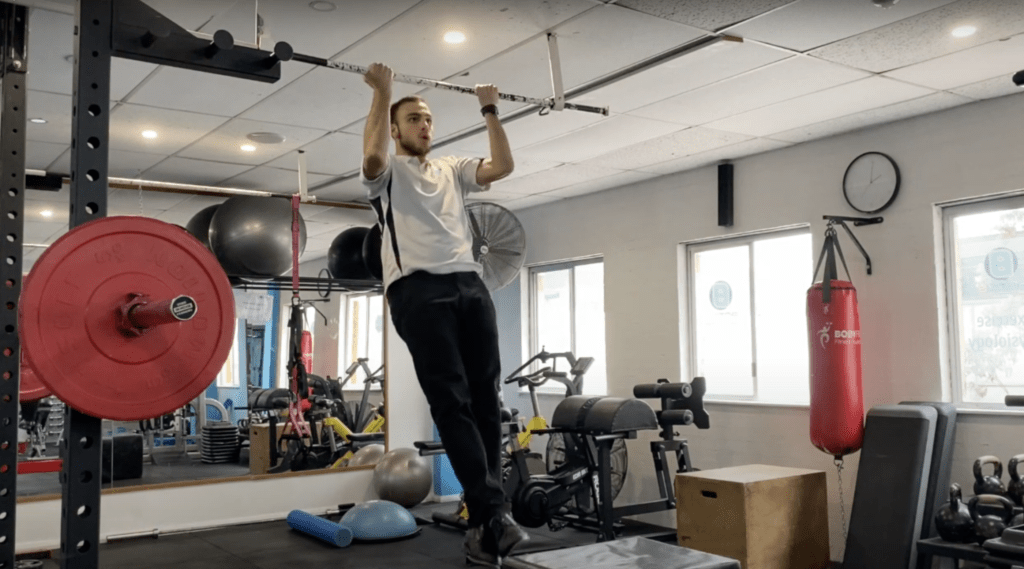
This functional exercise recruits several muscles during each phase of the movement. The main muscles recruited can depend on your hand grip, as different grip positions change the biomechanics of the movement, and therefore the muscles recruited. For example:
The Chin-Up is a compound exercise; several muscles are engaged during the movement. Because of this, exercise efficiency and effectiveness are at an optimal level. In saying this, because there is such a wide variety of ways to complete this exercise, each way has its dominant neuromuscular benefits.
a) Wide-Grip Chin-Up
Being the most difficult of the three positions, the Wide-grip Chin-Up utilises your Latisimus Dorsi (Lats), Trapezius (Traps), Rhomboids, and Thoracic Erector Spinae muscles. This is the most difficult as there is greater activation of your lats to be able to complete the movement.
b) Neutral-Grip Chin-Up
With the Neutral-Grip Chin-Up, engagement of the Biceps Brachii is involved during this movement, which can be much easier when compared to the Wide-Grip Chin-Up. It is critical to note that, although there is a change in grip, lats, traps, and rhomboid activation are still present throughout, but not as heavily targeted.
c) Under-Grip Chin-Up
Also known as the biceps chin-ups, the Under-Grip Chin-Up utilises the Biceps, Lats, Traps and Rhomboids throughout the movement, but it is vital to understand that there is a greater engagement of your Pectoral (chest) muscles during this.
In essence, the Chin-Up is a very challenging exercise despite the way it is completed. During the movement, engagement of your core and forearm muscles is relatively consistent throughout all ways of completing the exercise.
As with all exercises, it is critical that you gradually build up to these more challenging exercises to ensure safety is maintained. In saying this, many more exercise variations differentiate from your strict chin-ups that can be implemented, such as negative chin-ups. Keeping this in mind, stay tuned for further blogs that will run through these further variations.
We have provided a safe exercise progression below with video demonstrations of each to help you.

If you have any further questions, please contact us anytime.
NOTE: This exercise can be further regressed and/or progressed, which we will review in further blogs, so stay tuned!


The Chin-Up is a fantastic closed-chain, compound upper-body exercise that can be simply modified to make the exercise easier or harder depending on your capabilities. It is a great way to obtain the desired neuromuscular benefits in an efficient yet effective manner.
There are many progressive options for the chin-up when you start to find them easier, with the L-Sit Chin-Up being a brilliant advanced exercise that you should gradually build up to and integrate into your training regime once your body is conditioned.
Following our safe progressive exercises shown above, you will find yourself at that level quicker than you think!
If you need further guidance, please reach out to us and take advantage of a free 15-minute telehealth consultation with our exercise physiologist.
Written by Paolo Mitry, an Exercise Physiologist at Activ8 Health Club.
Dips are an extremely versatile and practical exercise that primarily targets the triceps muscles located at the back of your arm that are responsible for straightening your arm. Due to the nature of the exercise and the requirements to stabilise and control the movement, you will also be recruiting and working many muscles in your shoulders, chest, back and core muscles. Although only one motion is involved during the movement, it can be spiced up to incorporate these muscles (and more), you wouldn’t believe! It is also a very efficient way of increasing your shoulder mobility.
One of the more complex variations of this exercise is the weighted dip. As mentioned, this exercise trains and strengthens muscles found in your upper body, but the engagement of your core muscles mustn’t be overlooked! It is a fantastic exercise to incorporate into your training when wanting to target multiple muscles in one movement.
As with all exercises, it is vital to gradually build up the complexity of the movement to ensure safety is maintained. Within this blog, exercise progressions are included to help guide you to safely complete the unassisted weighted dip exercise!

The dip exercise is an extremely versatile yet practical exercise that can target many muscles found in your upper body. Most of the time, the weight involved comes through moving your body weight through gravity, which makes it highly challenging! Due to this, many variations of this exercise are available.

Throughout the movement present in the dip exercise, many muscles are being activated, which in tandem will increase overall neuromuscular strength and hypertrophy (depending on your uses in your workouts).
It is also very effective in increasing your shoulder mobility. In addition, the functionality of this exercise is second to none, replicating the movements we find ourselves doing in everyday life, like helping ourselves up from a seated/floor position, therefore proving to be an extremely effective exercise!

As with all exercises, it is critical that you gradually build up to these more challenging exercises to ensure safety is maintained. A safe exercise progression may include the following;
1. Standing Rope Pulldown (Tricep Extension)
2. Box Dips (Knees Bent & Straight)
3. Box Dips (Elevated)
4. Weight-Assisted Dip
5. Dips
6. Dips (Weighted)
Note: This exercise can then be further progressed for added benefits!
The dip exercise is an extremely versatile yet practical exercise that can target many muscles found in your upper body, including your triceps, chest and shoulders. Most of the time, the weight involved comes through moving your body weight through gravity, which makes it highly challenging! Due to this, many variations of this exercise are available, even with limited equipment. Although this exercise looks difficult in nature, there are many ways to make it easier (and harder)!
The dips are an extremely effective exercise to build upper body strength, power, muscle mass and overall shoulder girdle integrity and stabilisation. Additionally, they provide functional benefits, replicating the movements we find ourselves doing in everyday life, for example, helping ourselves up from a seated position, lifting the kettle to make a cup of tea, or even throwing a football.
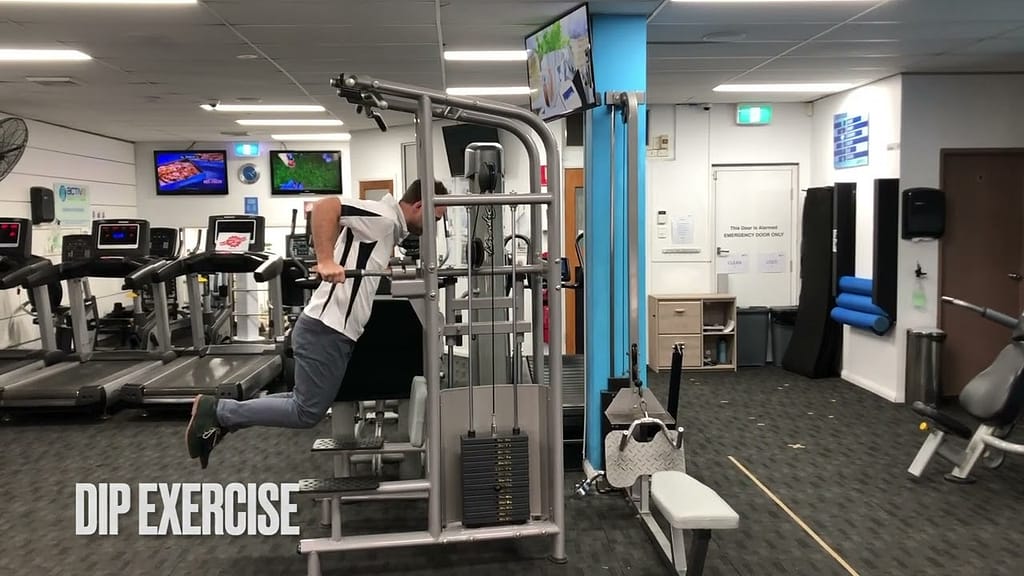
Regarding the dip, to perform this exercise, follow these steps:
As with all exercises, it is critical that you gradually build up to these more challenging exercises to ensure safety is maintained. It is critical that you first obtain sufficient mobility within your shoulder joint, along with allowing your connective tissues to adapt to the load applied throughout dips.
We have provided a safe exercise progression below with video demonstrations of each to help you, so check them out!

If you have any further questions, please contact us anytime.
NOTE: This exercise can be further progressed, which we will review in further blogs, so stay tuned!


The dip is an extremely relevant and versatile exercise to incorporate into your training regime that can be altered to make it easier or harder! It is a great way to build upper body strength, power, muscle mass and overall shoulder integrity and rehabilitation.
It is a great exercise that can be modified to meet everyone’s needs and capabilities, with many regressions available. Not only does it work our triceps, but you will also require recruitment of your shoulder, back and core muscles to control and correctly execute the movement.
The Weighted Dip is a fantastic variation of the dip exercise, but it can be quite complex and demanding. For your safety, ensure you work through the mentioned regressions to condition your body prior to introducing this variation!
If you need further guidance, please reach out to us and take advantage of a free 15-minute telehealth consultation with our exercise physiologist.
Written by Paolo Mitry, an Exercise Physiologist at Activ8 Health Club
Lunges are an extremely versatile and functional movement used to build lower body strength and endurance, whilst improving coordination, balance, and lower extremity power. Unlike the squat and deadlift, lunges are considered a unilateral movement, meaning they primarily train one side of the body at a time. Many daily activities are unilateral in nature, for example, walking/running, walking up and down stairs, and getting up and down from the floor. The importance of these should be incorporated into your exercise routine by any means possible.


Lunges are a complex movement that involves multiple joints working in conjunction, whilst recruiting many major muscle groups at one time. They are a great way to build strength in the muscles of the lower body, including the quadriceps, glutes, hamstrings, and calves; however, this exercise doesn’t just build lower body strength and endurance!
The unilateral (single-sided) nature of the movement causes your body to be less stable, forcing you to recruit and activate multiple stabilising muscles to keep you upright, helping to train balance and coordination, in addition to lower body strength.
Lunges are an extremely functional movement, commonly prescribed as part of an exercise program to prepare and strengthen your body to complete a range of movements in your daily life. Lunges involve stepping forward with one leg and lowering your hips until your knees are bent to 90 degrees. This movement pattern mimics many activities you complete every day, for example, walking, running, climbing stairs and getting up and down from the floor. Additionally, as lunges are a single-leg or ‘unilateral’ movement, they are used to train potential strength differences between the left and right legs. Furthermore, they can be adapted, changed or modified to suit anybody’s needs, goals and level of experience.
There are many ways lunges can be progressed and regressed depending on your experience and strength levels. There is an abundance of lunge variations to pick from, each designed to target different muscle groups and achieve different goals.
Variations include different loading positions (e.g., back, front or overhead), changes in foot placement (e.g. front foot elevated or rear foot elevated), different types of resistance (e.g. kettlebells, dumbbells, barbells, resistance bands), and different movement complexity (e.g. stationary/static lunge, walking or jump lunges).
It is important to consider your goals and capabilities to ensure the correct variation is chosen and proper technique can be maintained throughout the movement.

Lunges are an extremely versatile and functional movement used to build lower body strength and endurance, and improve coordination, balance, and body awareness. Many daily activities are unilateral in nature, for example, walking/running, walking up and down stairs, and getting up and down from the floor. For this reason, lunges should be included as part of everyone’s exercise program.
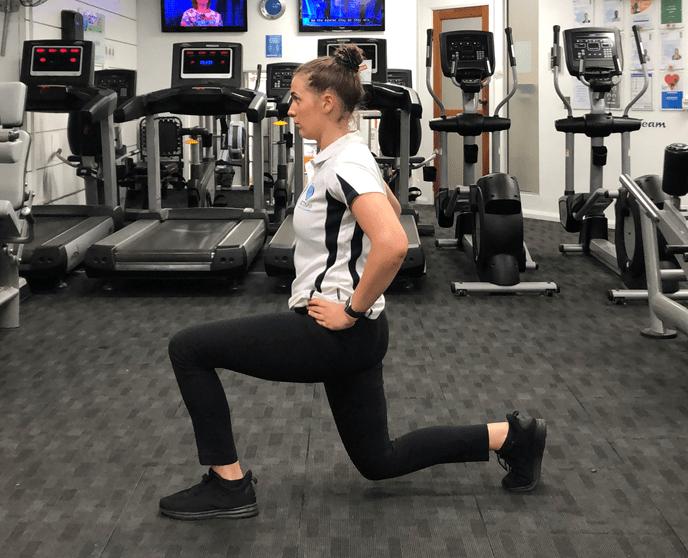
Lunges are a complex movement that involves multiple joints working in conjunction, whilst recruiting many major muscle groups at one time. They are a great way to build strength in the muscles of the lower body, including the quadriceps, glutes, hamstrings, and calves; however, this exercise doesn’t just build lower body strength and endurance! The unilateral (single-sided) nature of the movement causes your body to be less stable, forcing you to recruit and activate multiple stabilising muscles to keep you upright, helping to train balance and coordination, in addition to lower body strength.
Lunges are an extremely functional movement, commonly prescribed as part of an exercise program to prepare and strengthen your body to complete a range of movements in your daily life. Lunges involve stepping forward with one leg and lowering your hips until your knees are bent to 90 degrees. This movement pattern mimics many activities you complete every day, for example, walking, running, climbing stairs and getting up and down from the floor. Additionally, as lunges are a single-leg or ‘unilateral’ movement, they are used to train potential strength differences between the left and right legs. Furthermore, they can be adapted, changed or modified to suit anybody’s needs, goals and level of experience.
Whilst there are numerous variations and types of lunges, we have provided simple steps for the body-weight stationary lunge. Further variations and video demonstrations have been included below, so keep reading!
To perform the stationary body weighted lunge, follow these simple steps;
There are many ways lunges can be progressed and regressed depending on your experience and strength levels. There is an abundance of lunge variations to pick from, each designed to target different muscle groups and achieve different goals. Variations include different loading positions (e.g., back, front or overhead), changes in foot placement (e.g. front foot elevated or rear foot elevated), different types of resistance (e.g. kettlebells, dumbbells, barbells, resistance bands), and different movement complexity (e.g. stationary/static lunge, walking or jump lunges). It is important to consider your goals and capabilities to ensure the correct variation is chosen and proper technique can be maintained throughout the movement.
Here is an example flowchart of how the lunge movement pattern could be progressed safely, starting from a simple variation to the more complex movements requiring greater control, mobility, and recruitment of multiple major muscle groups. Video demonstrations have been provided of each to help you.
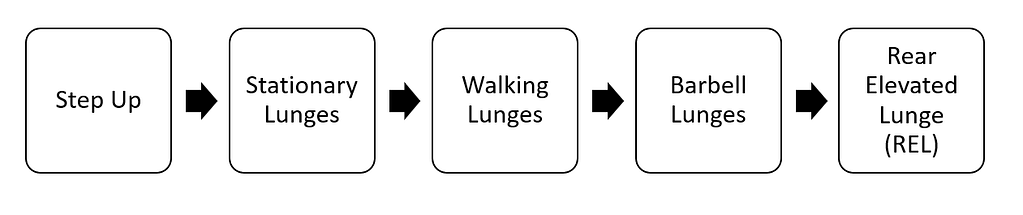
Below we have summarised some of the key information about just a few of the many lunge variations to help you gain a better understanding of what muscles are recruited, the benefits and safety tips. If you have any further questions, please contact us anytime.
| Primary Muscles Recruited (note: there are many other muscles working throughout all lunge variations) | Performance & Safety Tips | Main Benefits | |
| Step Up | – Similarly to lunges, step-ups are a unilateral movement. For a brief time during this movement, your entire body weight is balanced on one leg while standing up, challenging balance. – The step-up is one of the most regressed unilateral leg exercises. Stepping onto a fixed object allows you to find balance and gain momentum in the lift. – The height of the step can be altered depending on your hip and knee mobility – All-round lower body recruitment and strengthening exercises. – A very functional movement that simulates many daily activities | – Quadriceps – Glutes – Hamstrings – Stabilising muscles, including abdominals and back muscles | Primary Muscles Recruited (Note: there are many other muscles working throughout all lunge variations) |
| Stationary Lunge | – Stand facing a step/box – Place your left leg on the step – Step your right foot up, pushing through your left heel, ensuring you keep your body upright – Step your right foot back down, keeping your weight on the left foot. Leave your left foot on the step and repeat – Ensure your knee travels forward over your toe | – Position your feet shoulder-width apart – Take a big step forward with one foot, keeping your body upright – With both feet facing forward, drop/bend your hips down between your feet. Continue to lower your hips down until both knees are bent to 90 degrees, allowing your back heel to come up off the floor. – Push back up to the starting position and repeat – Ensure your knees travel directly forward over your toes at all times. Tip – have a bar or wall beside you to use for balance. This will allow you to get confident with the movement. When comfortable, try without holding on. Tip – to make this exercise harder, hold a dumbbell or kettlebell in each hand, or pause for 5 seconds at the bottom of the movement. This will make your muscles work harder for longer, allowing you to build greater strength. | – This is a unilateral movement since you work on each side of your body independently. Single-leg movements train your balance and coordination as you have to activate your stabilising muscles to stay upright – Being a unilateral movement also allows you to “even out” any strength and muscular imbalances (asymmetries) – All-round lower body recruitment and strengthening exercises. – A very functional movement that simulates many daily activities |
| Walking Lunge | – Quadriceps – Glutes – Hamstrings – Stabilising muscles, including abdominals and back muscles | – Stand with your feet hip-width apart and hands by your side – Take a big step forward with one foot, ensuring you remain in a tall, upright position – With both feet facing forward, drop/bend your hips down between your feet. Continue to lower your hips down until both knees are bent to 90 degrees, allowing your back heel to come up off the floor. – Push back up and forward (mainly through your front leg), to a standing position – Repeat, stepping forward with your other leg. Ensure your knees travel directly forward over your toes at all times. Tip – to make this exercise harder, hold a dumbbell or kettlebell in each hand. You could also try adding a second movement, for example, a bicep curl or trunk twist. | – This unilateral movement requires more balance and stability than the stationary lunge due to the dynamic component of the exercise. Walking while lunging requires your stabilising muscles around the knees, hips and core to work harder to keep you upright and balanced throughout the movement. – Being a unilateral movement also allows you to “even out” any strength and muscular imbalances (asymmetries) – All-round lower body recruitment and strengthening exercises. – A very functional movement that simulates many daily activities |
| Barbell Stationary Lunge | – The addition of a barbell in this lunge variation increases the tension placed on the muscles, which allows you to develop greater strength in the lower body muscles. – Unilateral exercise requires more balance, stability and coordination to stay upright and maintain technique – Being a unilateral movement also allows you to “even out” any strength and muscular imbalances (asymmetries) – All-round lower body recruitment and strengthening exercises. – A very functional movement that simulates many daily activities | – Set up the barbell on the rack so that it’s just below shoulder height. Place your shoulders underneath the barbell and your hands on the bar, ensuring it is resting on your back comfortably. – Once positioned, take a small step backwards so the barbell is away from the rack – Stand with your feet hip-width apart. Take a big step forward with one foot, ensuring you remain in a tall, upright position. – With both feet facing forward, drop/bend your hips down between your feet. Continue to lower your hips down until both knees are bent to 90 degrees, allowing your back heel to come up off the floor. – Straighten your knees and push back up to the starting position. Repeat. – Ensure your knees travel directly forward over your toes at all times. | – Quadriceps – Glutes – Hamstrings – Stabilising muscles, including abdominals and back muscles |
| Rear Foot Elevated Lunge (REL) | – Quadriceps – Glutes – Hamstrings – Stabilising muscles, including abdominals and back muscles | – Stand with your feet hip-width apart and hands by your side, or holding onto a bar/wall. Have a bench, step or chair behind you to place your back leg on. -Reach one foot back so toes are on the bench behind you and heel lifted. Ensure you remain in a tall, upright position. – With both feet facing forward, drop/bend your hips down, lowering your body towards the floor. Continue to lower your hips down in a slow and controlled movement until your back knee touches the floor/mat. – Push back up to the starting position, ensuring you are pushing through the foot that remains on the floor. Continue moving up and down for the desired number of reps and switch sides. – Ensure your knees travel directly forward over your toes at all times. Tip – have a bar or wall to one side to hold for balance while you get used to the movement Tip – start by using a lower bench or step, this will reduce the range of motion making the movement easier. Once you are confident you can increase the height of the bench/step to make it harder or even add dumbbells. | – Elevating the rear foot shifts more of your weight to your front leg, increasing the demand and stimulus to the muscles on your front leg. – Having your rear foot elevated challenges your mobility and allows for stretching through your hip flexor – Unilateral exercise requires more balance, stability and coordination to stay upright and maintain technique – Being a unilateral movement also allows you to “even out” any strength and muscular imbalances (asymmetries) – All-round lower body recruitment and strengthening exercises. – A very functional movement that simulates many daily activities |


Lunges are one of the most effective exercises for strengthening the entire lower limb. The lunge is an extremely functional movement, mimicking many different activities of daily living, making it an ideal choice for general health and fitness training programs. Additionally, lunges require a significant amount of recruitment of your Lumbo-pelvic-hip complex (pelvis, low back and core) and all your muscles responsible for maintaining balance and stability.
Some of the other health benefits of lunges are;
Lunges are extremely effective and functional movements that must be a staple in your exercise plan. This compound movement recruits a large number of major muscle groups in your body, leading to significant strength and balance improvements, along with many other health benefits. This movement can be performed by anyone, ensuring you maintain the correct technique throughout. It is important that you are completing a lunge variation that is appropriate for your goals, needs and level of fitness. If you need further guidance, please reach out to us and take advantage of a free 15min telehealth consultation with our exercise physiologist.
Written by Kaitlyn Eisenhuth, an Exercise Physiologist at Activ8 Health Club
The TRX/Suspension Trainer is an innovative device that allows you to train your entire body simply through the resistance of your body weight. There are many exercises that can be performed with this piece of equipment and can be packed in your training bag, no matter where you are travelling.
One of these great exercises is the TRX/Suspension Trainer Pike. This exercise trains and strengthens your upper body, whilst incorporating the majority of your core muscles without the need for any other equipment. It’s an excellent exercise for those who want to progress the high plank, looking for variety or some functional full body strength. Interesting, this exercise may look simple; however, it is very challenging, and you will even be training your cardiovascular system!
As with all exercises, it is critical that you gradually build up to these more challenging exercises to ensure safety is maintained. We have included some exercise progressions to master before moving on to this one. In addition, this exercise can be further progressed, which we will discuss in future blogs.

The TRX/Suspension Trainer is an innovative device that allows you to train your entire body simply through the resistance of your body weight. There are many exercises that can be performed with this piece of equipment and can be packed in your training bag, no matter where you are travelling.

There are many associated benefits of TRX/Suspension Trainers, including increased strength, endurance and hypertrophy (depending on your uses in your workouts); however, the primary benefit is the neuromuscular recruitment of your stabilisers and core muscles whilst performing exercises.
These improvements can be transferred into functional strengthening, injury prevention and even hypertrophy.
As with all exercises, it is critical that you gradually build up to these more challenging exercises to ensure safety is maintained. A safe exercise progression may include the following;
Supine pelvic floor activation
Low plank on knees
Plank on toes
High Plank on toes
High Plank on TRX/Suspension Trainer
TRX/Suspension Trainer Pike
Note: This exercise can be further progressed for added benefits!
One of these great exercises is the TRX/Suspension Trainer Pike. This exercise trains and strengthens your upper body, whilst incorporating the majority of your core muscles without the need for any other equipment. It’s an excellent exercise for those who want to progress the high plank, looking for variety or some functional full body strength. Interesting, this exercise may look simple; however, it is very challenging, and you will even be training your cardiovascular system!
To perform this exercise, follow these simple steps;
As with all exercises, it is critical that you gradually build up to these more challenging exercises to ensure safety is maintained.
We have provided a safe exercise progression below with video demonstrations of each to help you.
If you have any further questions, please contact us anytime.
NOTE: This exercise can be further progressed, which we will review in further blogs so stay tuned!
The TRX/Suspension trainers are a versatile and convenient training tool that uses your own body weight as the resistance. It is a great way to change up your training and achieve some wonderful results.
The Pike exercise is a great advanced exercise that you should gradually build up to and introduce once your body is conditioned. Gradually work towards this by following the progressive exercises as shown below.
If you need further guidance, please reach out to us and take advantage of a free 15min telehealth consultation with our exercise physiologist.
Written by Kaitlyn Eisenhuth, an Exercise Physiologist at Activ8 Health Club